
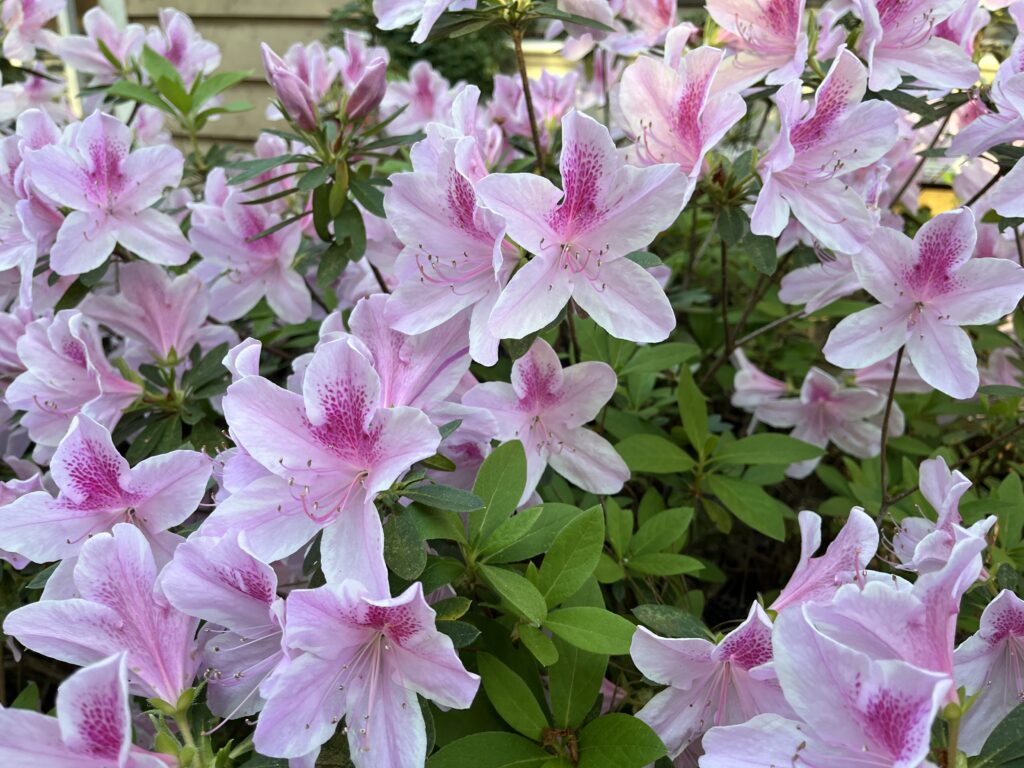
In Louisiana, azaleas mark the arrival of spring, filling gardens and streetscapes with vibrant pink, white and purple blooms. These iconic evergreen Southern shrubs are reliable performers and come in an impressive array of sizes and colors. Learn more!
Photo: George L. Taber azalea by Karen Blackburn
Azaleas are classified as Rhododendrons. Azaleas differ from their cooler-climate cousins having 5 stamens to the 10 or more in Rhododendron. Introduced in Charleston as early as the 1790’s, and the 1830’s in Louisiana, Azaleas peak popularity was during the 1930’s and later. The lush flowered evergreen imports are more delicate than deciduous (shedding its’ leaves annually) native varieties. Mixing varieties with different lengths of bloom is recommended to extend the bloom season. Azaleas grow in full sun or partial shade. Shade under trees with open tall canopies works best. They require good drainage, acid soil pH of 5.0 to 6.0. Plant them high for good drainage in a mixture of equal parts peat moss, Azalea Camellia soil and sharp builder’s sand. Mulch with Oak leaves and Pine bark or needles to maintain moisture and protect the shallow roots.
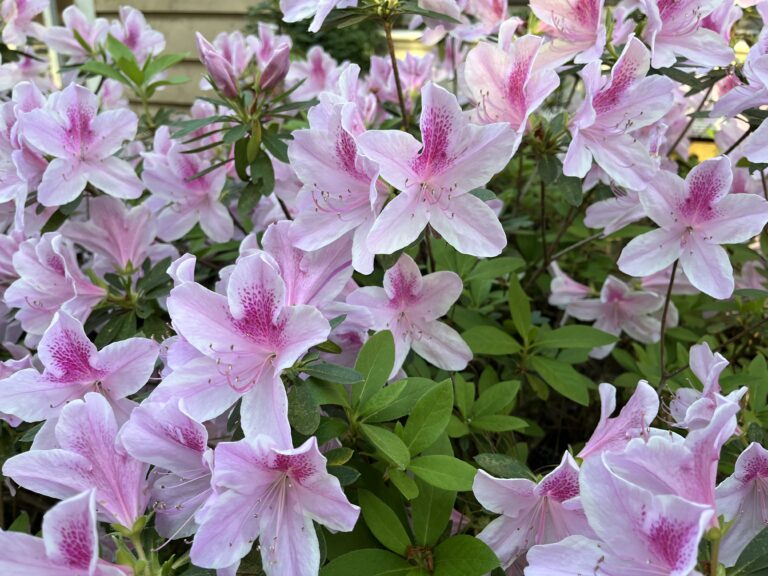
Rhododendron (sp)
The most commonly planted Azaleas were the large Southern Indica types. They produce their flowers in a short but spectacular display from mid-March through mid-April. With the introduction and more common use of alternate-season blooming azaleas, such as the popular Encore and Robin Hill groups, it’s not unusual to also see Azaleas blooming during late summer, fall and winter. Fall is an excellent time to plant hardy shrubs like Azaleas. Choose a location that provides proper lighting. Some varieties of Azaleas will tolerate full sun if provided with adequate moisture. Generally,
azaleas grow best when they receive some shade during the day. Four to six hours of morning sun from an eastern exposure is considered ideal. Azaleas tend to have sparse foliage, look leggy and bloom poorly when planted in too much shade. Grown in too much sun, they wilt frequently during hot, dry weather, and their leaf edges can become scorched and brown.
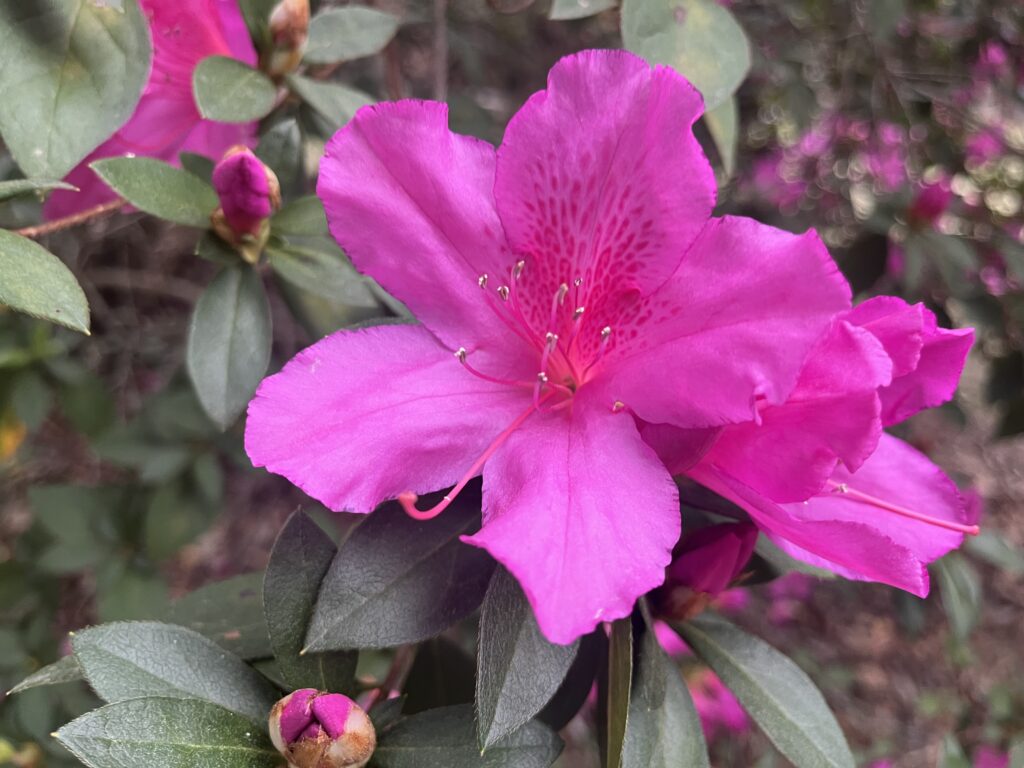
Rhodedendron (sp)
Careful bed preparation before planting will help ensure success. A soil high in organic matter is important. After removing unwanted grass or weeds from the bed, turn the soil to a depth of at least 8 inches, break up the soil clods and spread 3 to 4 inches of compost, aged manure, finely ground pine bark or peat moss. If the soil where you garden is slightly alkaline, make the soil more acid because this is
what azaleas prefer. Apply ground sulfur or copperas (iron sulfate) according to package directions to help make the soil more acidic. Apply a light application of an all-purpose or acid-loving-plant fertilizer over the bed. Thoroughly incorporate everything into the bed, rake it smooth, and you’re ready to plant.Water the plants prior to planting if the soil in the pots is dry. Arrange the azaleas in the bed while they
are still in their pots to get the spacing and arrangement right. Remove the pot before planting. After removing the plants from the container, you may see a very dense network of roots around the outside of the root ball. This is not uncommon in container-grown plants. Use a knife to vertically cut into the root ball in several places or use your fingers to pull apart the root ball slightly and loosen it up. This will
encourage the roots to grow out into the surrounding soil. Azaleas should be planted so that the top of the root ball is at or slightly above the soil level in the bed.
Do not plant them too deep. Gently firm the soil around each plant to eliminate air pockets. Mulch the bed with about 2 to 3 inches of pine straw, leaves or pine bark and thoroughly water the bed to finish settling the soil. Azaleas require good drainage, but they also need an even supply of moisture and will not thrive
in a location that is constantly wet or constantly dry. Make sure you plant them in beds that are well drained. It will be important to thoroughly and regularly water your newly planted azaleas during summer next year whenever the weather is dry.
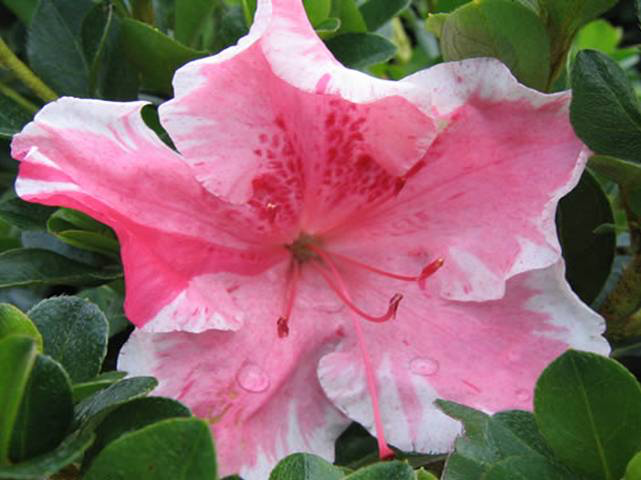
Rhodendendron (sp)
Azaleas, the major ornamental plants in Louisiana’s residential and commercial landscapes, are available in many flower colors, growth habits and foliage characteristics.
Some recommended varieties for Louisiana garden Rhododendron indicum:
- Indian Azaleas The most common azaleas grown in Louisiana are Indian azaleas. An average mature height is 6 ft x 6 ft unpruned can reach 10 ft. Flowers of Indian azaleas are usually 2 to 3 1/2 inches across.
- Southern Charm Large, rosy-pink flowers. Vigorous grower.
- Pride of Mobile Watermelon-red flowers. Vigorous grower. Mid-season flowering.
- President Clay Orange-red flowers. Vigorous, upright growth. Smaller flowers than other Indianvarieties.
- Formosa Magenta flowers. Most popular azalea.
- George L. Tabor Bluish-pink flowers. Mid-season flowering.
- Mrs. G.G. Gerbing Large white flowers. Spreading growth habit.
- Daphne Salmon Salmon pink flowers. Mid-season flowering.
- Fielder’s White Mid-season flowering.
- Formosa Red Also called Dixie Beauty.
- Judge Solomon Rosy-pink flowers. Similar to Formosa.
Dwarf Azaleas (Kurume)
They reach heights of 4 to 6 ft, but normally don’t reach this size. A more normal size is 3 ft. Flowers are usually 1 1/2 to 2 inches across.
- Christmas Cheer Bright red flowers. Compact growth. Mid-season flowering.
- Snow White flowers. Compact growth habit. Persistent flowering. Mid-season flowering.
- Coral Bells Very popular variety. Shell-pink flowers. Early mid-season flowering.
- Hershey’s Red Bright red flowers. Double flowers. Heavy bloomer. Mid-season flowering.
- Judge Solomon Rosy-pink flowers. Similar to Formosa.
- H.H. Hume Bright carmine-red flowers. Low growth habit. Mid-season flowering.
- Hinodegiri Carmine-red flowers. Low, mounding growth habit. Mid-season flowering.
Satsuki Hybrids (and Related Varieties)
The Satsuki hybrid azaleas flower later in the spring season, usually April and May. Later than Indian and Dwarf azaleas.
- Gyokushin Large, white flowers with pink center. Excellent foliage. Low, compact growth.
- Hardy Gardenia Linwood azalea. White, gardenia-like flowers. Low, spreading growth. Great white flowering azalea.
- White Gumpo White flowers. Very late flowering. Low, compact growth habit.
- Red Gumpo Red flowers. Later blooming. Low, compact growth habit.
- Pink Macrantha Large, pink flower. Reddish foliage. Old flowers stay on plant.
- Pink Gumpo Large, rosy pink flowers. Small foliage. Low, dense growth habit.
Other Popular Azalea Groups
- Glenn Dale hybrids Popular Glenn Dale hybrids include Allure (rosy-pink flowers), Copperman (orange-red flowers), and Fashion (salmon to orange-red flowers).
- Carla hybrids Popular Carla varieties are Carror (semi-double rose pink flowers), and Sunglow (bright red flowers).
- Girard hybrids Popular Girard hybrids are Hot Shot (orange-red flowers), Sandra Ann (purple flowers), and Unsurpassable (red flowers).
- Robin Hills Conversation Piece, flowers of different colors on the same plant. Some flowers will be dark pink and some will be nearly white, others are splashed and variegated with dark pink and white with darker pink center blotches. Flowers up to 4 inches & occur both in fall and in spring. Low-growing, mounding evergreen shrub. Patios or foundation plantings. Sir Robert is a popular Robin Hill variety. Its flowers range from white to pink. The most popular Robin Hill variety is Watchet. Watchet produces large 3 1/2-inch flowers that are clear pink and ruffled. Plants are compact and spreading.
- Encore Debuted in the late 1990s, Encores are the only patented brand of azaleas to bloom in spring, late summer and fall. Some 23 varieties are now available in a number of different colors.
- Rhododendron canescense -Native Azalea, Honeysuckle Azalea,
Pinxter Azaleas, Piedmont Azalea
Native Azalea or Rhododendron canescense is of the Ericaceae (blueberry) family. Rhododendron, derives from Greek meaning rose tree. Canescense refers to the gray/white hairs on the underside of the leaves. Native to Southeastern US (North Carolina to Florida, west to Texas), these azaleas are found in moist woods and swamp margins, acidic soil, usually on sandy banks for hundreds of thousands of years. They grow in single specimens and colonies, upright growth, vase shaped from 10-15 ft tall. They prefer full sunlight to partial shade in Spring producing fragrant (funnel shaped) blooms with pink to white often with a darker sticky pink tube attracting hummingbirds, bees and butterflies.
Learn More:
GetItGrowing: Southern Indica Azaleas with Jason Stagg
Sources:
Dr. Allen Owings, Research Horticulturist, LSU AgCenter, Horticulturist, Research
Dan Gill, LSU Consumer Horticulturist retired. www.lsuagcenter.com